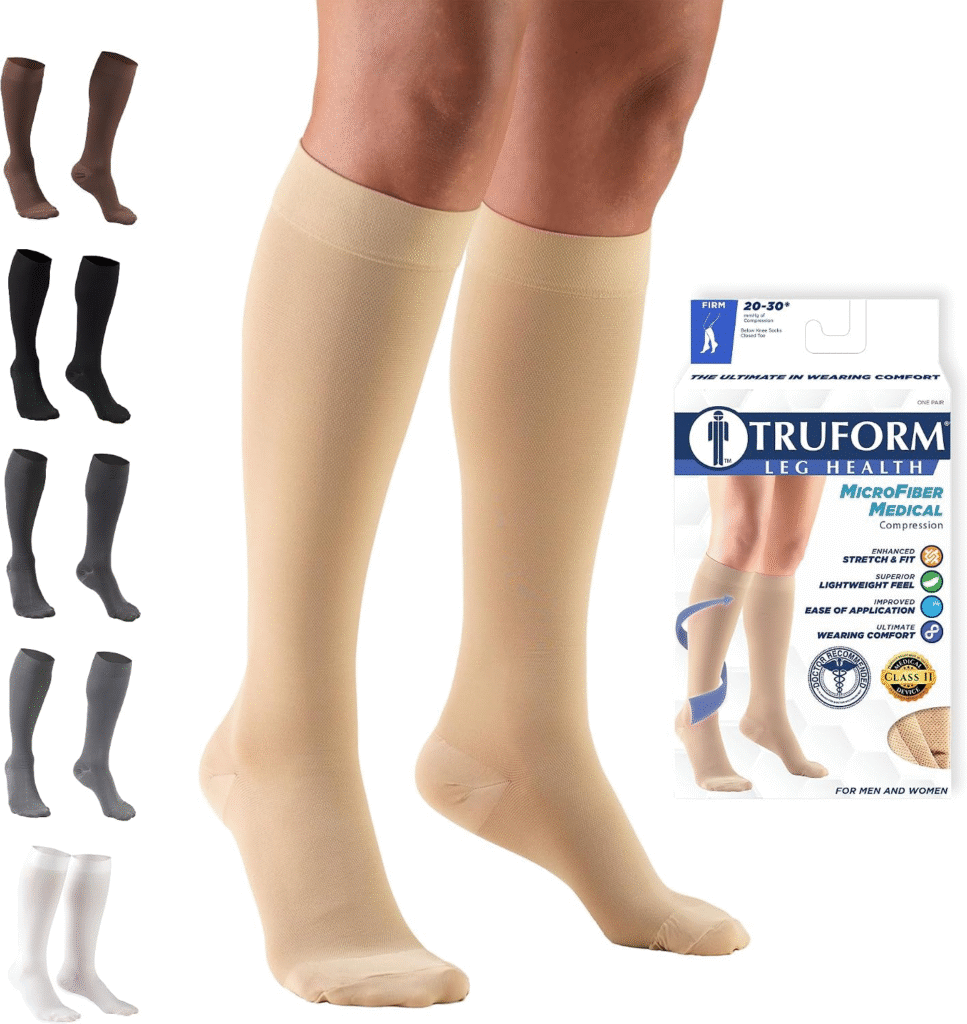
Varicose veins are a common concern that can affect the appearance and comfort of your legs. Enlarged, twisted veins may be accompanied by swelling, aching, heaviness, or tiredness, especially after spending many hours sitting or standing. For people dealing with these symptoms, compression stockings for varicose veins can be a useful part of everyday vein care.
These specially designed stockings apply controlled pressure to the legs. The pressure is usually strongest around the ankle and gradually decreases toward the upper leg, helping support the normal return of blood toward the heart.
Why Do Varicose Veins Develop?
Veins in the legs contain small valves that help keep blood moving in the right direction. When these valves become weak or do not close properly, blood can collect in the veins instead of moving efficiently upward.
Over time, increased pressure can cause veins to become enlarged and visible beneath the skin. Some people experience no symptoms, while others may notice:
- Aching legs
- Swelling around the ankles
- A feeling of heaviness
- Tiredness after standing
- Itching around affected veins
- Leg discomfort later in the day
Compression stockings are designed to help with some of these symptoms by providing external pressure around the legs.
How Compression Stockings Work
The graduated pressure provided by compression stockings is one of their main features. The material is typically tighter near the ankle and gradually becomes less compressive farther up the leg.
This design can help support the movement of blood through the veins. By providing gentle pressure around the leg, compression garments may also help reduce fluid accumulation and swelling in some people.
The amount of compression varies between products, so it is important to choose a level appropriate for your circumstances.
Main Benefits of Compression Stockings
There are several reasons people use compression stockings when dealing with varicose-vein symptoms.
1. They May Reduce Swelling
Swelling around the ankles and lower legs can become more noticeable after a long day. Compression stockings can help manage this type of swelling by providing consistent pressure around the legs.
2. They Can Help With Leg Heaviness
Some people describe varicose-vein discomfort as a heavy or tired feeling. Wearing appropriately fitted compression stockings during the day may make the legs feel more supported.
3. They May Improve Everyday Comfort
People who spend much of the day standing or sitting may experience leg discomfort. Compression stockings can be incorporated into a daily routine to provide additional support during these activities.
4. They Provide Consistent Support
Unlike ordinary socks, compression stockings are specifically manufactured to provide a controlled level of pressure. This makes them different from standard athletic or casual socks.
Different Types of Compression Stockings
There isn’t one type of compression stocking that works for everyone. They come in different lengths and designs.
Knee-high compression stockings stop below the knee and are a popular choice for lower-leg symptoms.
Thigh-high stockings extend farther up the leg and may be considered when symptoms affect areas above the knee.
Full-length compression garments provide compression over a larger portion of the legs and may be recommended for particular situations.
There are also different materials and styles available, including options designed for everyday clothing.
What Compression Level Should You Choose?
Compression levels are usually measured in mmHg, or millimeters of mercury. The number indicates the amount of pressure the garment provides.
Lower levels are generally used for lighter support, while higher levels provide stronger compression. However, selecting a compression level should not simply be based on choosing the highest available number.
For people with diagnosed vein or circulation problems, a healthcare professional can help determine whether compression is appropriate and what level may be suitable.
Getting the Right Fit
Proper sizing is just as important as choosing the correct compression level.
A compression stocking that is too large may not provide adequate support. One that is too small may feel excessively tight and uncomfortable.
Manufacturers typically provide measurement instructions based on areas such as the ankle, calf, and sometimes thigh. Following those instructions can help you find a better fit.
If possible, measure your legs according to the manufacturer’s guidelines rather than choosing a size based only on your usual shoe or clothing size.
Tips for Putting on Compression Stockings
Compression stockings can feel difficult to put on at first because they are designed to fit tightly.
Try putting them on early in the morning when leg swelling is often lower. Turn the stocking partially inside out, place your foot into the toe and heel sections, and gradually work the material upward.
Avoid pulling aggressively from the top because this can stretch or damage the fabric.
Once the stocking is on, smooth out wrinkles and make sure the material is distributed evenly across the leg.
Can You Sleep in Compression Stockings?
For many people, compression stockings are intended for daytime use rather than overnight wear. However, individual recommendations can differ depending on the reason compression is being used.
If you have been specifically instructed to wear compression garments overnight, follow that professional guidance. Otherwise, ask a healthcare professional or the manufacturer about appropriate wearing times for your particular product.
How Long Do Compression Stockings Last?
The lifespan of compression stockings depends on the quality of the material, how frequently they are worn, and how they are washed.
Over time, the elastic fibers can lose their effectiveness. If a stocking becomes stretched, damaged, loose, or noticeably different from when it was new, it may no longer provide the intended compression.
Following the manufacturer’s washing and care instructions can help preserve the garment.
When to Seek Medical Advice
Compression stockings can help manage certain symptoms, but they should not be used to ignore potentially serious changes in your legs.
Speak with a healthcare professional if you experience persistent or worsening swelling, significant pain, skin changes, sores, or bleeding from a varicose vein.
Sudden swelling, warmth, redness, or severe pain in one leg should also be medically assessed promptly because these symptoms can have causes that require urgent attention.
Final Thoughts
For many people, compression stockings for varicose veins can be a convenient way to support leg comfort and manage symptoms such as swelling, heaviness, and aching. Their graduated pressure is designed to provide targeted support while you go about your daily activities.
The most important factors are proper sizing, appropriate compression, and correct use. Compression stockings don’t remove varicose veins themselves, but they may help make everyday life more comfortable.
If you have significant vein symptoms or an underlying circulation condition, getting professional advice before choosing a compression level is a sensible step.