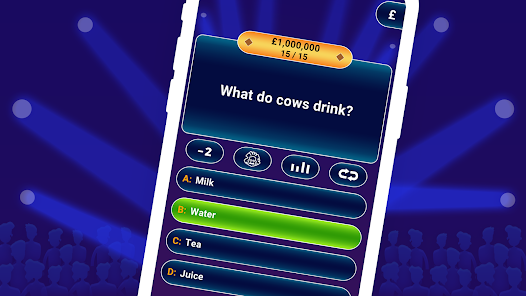
In today’s fast-paced world, finding engaging ways to learn and connect with others has become increasingly important. Trivia games, long considered a form of entertainment, are now recognized for their powerful role in both educational and social contexts. These games, which test knowledge across a wide range of topics, offer benefits that extend beyond simple fun. By exploring how trivia games enhance learning and social interaction, we can understand why they have become a popular tool in classrooms, workplaces, and social gatherings.
Stimulating Cognitive Skills Through Trivia Games
One of the most significant benefits of trivia games is their ability to boost cognitive skills. These games challenge players to recall information quickly, make connections between concepts, and think critically under time constraints. Regular participation in trivia games encourages memory retention and improves overall mental agility.
Research shows that the brain thrives on challenges, and trivia games provide just that. Players engage in active recall, a process that strengthens neural connections and enhances long-term memory. The variety of topics in trivia games—from history and science to pop culture and literature—ensures that different areas of the brain are stimulated. Over time, this can lead to improved problem-solving skills, faster thinking, and better retention of factual knowledge.
Encouraging Lifelong Learning
Trivia games are not just for children or students; they are a valuable tool for lifelong learning. Adults who play trivia games regularly often find themselves seeking new knowledge to perform better in these competitions. This curiosity-driven learning creates a natural motivation to explore unfamiliar subjects.
Unlike traditional learning methods, trivia games make education engaging and interactive. Players often discover new interests and areas of expertise simply by participating in trivia challenges. Whether it’s learning obscure historical facts or mastering scientific concepts, trivia games make the learning process enjoyable and memorable. The competitive element adds excitement, turning what might otherwise feel like a chore into a stimulating mental exercise.
Strengthening Social Bonds
Beyond cognitive benefits, trivia games play a crucial role in fostering social interaction. Whether played in person or online, these games create opportunities for players to collaborate, communicate, and build relationships. Team-based trivia encourages cooperation and strategic thinking, as players combine their knowledge to achieve a common goal.
In social settings, trivia games serve as an icebreaker, helping individuals connect over shared interests. The friendly competition sparks conversation and laughter, reducing social barriers and promoting inclusivity. For example, trivia nights at local cafes or online trivia platforms allow strangers to bond over mutual curiosity, forming communities that might not exist otherwise. This social aspect of trivia games enhances emotional well-being, providing a sense of belonging and shared accomplishment.
Enhancing Communication Skills
Participation in trivia games can also improve communication skills. Team-based trivia, in particular, requires players to articulate their thoughts, share knowledge efficiently, and listen carefully to others. These interactions develop verbal reasoning and the ability to explain complex ideas concisely.
Moreover, players learn to navigate disagreements and respect differing perspectives. When team members hold different opinions about an answer, negotiating the correct solution fosters both critical thinking and empathy. Over time, these experiences translate into better communication skills in other areas of life, including work and personal relationships.
Promoting Healthy Competition
Trivia games introduce players to the concept of healthy competition. Unlike high-stakes scenarios that can cause stress, trivia games create an environment where competition is fun, supportive, and intellectually stimulating. Players are motivated to improve their performance without the pressure of significant consequences.
This competitive aspect encourages goal-setting and perseverance. Players learn to cope with both success and failure, developing resilience and adaptability. These lessons, learned in a relaxed and enjoyable setting, often carry over into real-world situations, enhancing both personal growth and professional development.
Supporting Teamwork and Collaboration
In many contexts, trivia games are designed to be played in teams, which strengthens collaboration skills. Teams must coordinate strategies, assign roles based on individual strengths, and pool their knowledge effectively. This dynamic mirrors real-life scenarios where teamwork is essential for success.
By working together, players experience firsthand the value of collective intelligence. They learn to appreciate diverse perspectives, recognize the importance of each member’s contribution, and develop leadership skills. These experiences are particularly valuable in educational and workplace environments, where collaborative problem-solving is increasingly important.
Utilizing Technology to Expand Social Learning
Modern trivia games often leverage technology to enhance both learning and social interaction. Online trivia platforms and mobile apps allow players to compete with friends or strangers across the globe. This digital connectivity expands opportunities for cultural exchange, exposing players to new ideas, languages, and perspectives.
Interactive features such as leaderboards, timed challenges, and chat functions increase engagement and foster a sense of community. Technology also enables personalized learning experiences, where players can focus on topics of interest while still enjoying the social aspects of gameplay. In this way, trivia games blend education and socialization seamlessly, making learning accessible, flexible, and enjoyable.
Applying Trivia Games in Education
Educators have increasingly recognized the value of trivia games as a teaching tool. Incorporating trivia into the classroom makes lessons more interactive and memorable. Students are more likely to retain information when it is presented in a game format rather than through traditional lectures or textbooks.
Teachers can use trivia games to review material, introduce new concepts, or encourage research-based learning. The competitive and collaborative nature of trivia motivates students to participate actively, fostering engagement and a positive learning environment. Additionally, these games can be adapted to suit different age groups, subjects, and learning objectives, making them a versatile educational resource.
Trivia Games as Stress Relief
Another often-overlooked benefit of trivia games is their role in stress relief. Engaging in a lighthearted, mentally stimulating activity can provide a break from routine tasks and reduce feelings of anxiety. The focus required to answer trivia questions shifts attention away from stressors, promoting mindfulness and mental clarity.
Playing trivia games with friends or family also strengthens emotional bonds, creating a supportive social environment. Laughter, shared victories, and playful competition contribute to overall happiness and well-being. In a world where stress is prevalent, trivia games offer a simple yet effective way to recharge both mentally and socially.
Conclusion
Trivia games are much more than a source of entertainment. They enhance learning by stimulating cognitive skills, promoting lifelong curiosity, and supporting educational goals. Simultaneously, they foster social interaction, improve communication, and build strong emotional and collaborative bonds among players. The combination of intellectual challenge and social engagement makes trivia games a powerful tool in modern learning and socialization.
Whether used in classrooms, workplaces, or casual gatherings, trivia games provide an enjoyable and effective way to develop knowledge, sharpen critical thinking, and connect with others. In a world where learning and social interaction are more important than ever, trivia games prove that fun and education can go hand in hand. Their continued popularity underscores their value as a tool for personal growth, social connection, and cognitive development.
Trivia games truly demonstrate that learning doesn’t have to be serious to be effective, and social interaction doesn’t have to be superficial to be meaningful. By engaging the mind and bringing people together, they continue to enrich lives in countless ways.