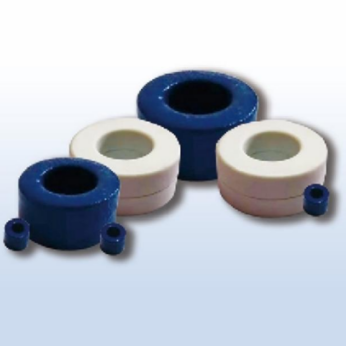
Current transformers (CTs) are indispensable components in modern electrical systems, serving as the bridge between high-voltage networks and measuring or protection devices. Their accuracy, efficiency, and reliability are critical for both operational safety and energy management. One of the most significant advancements in this field has been the development of low-loss nano-crystalline ring cores. These materials, especially the low-loss nano-crystalline ring core for current transformers, have transformed how engineers design and implement CTs.
Understanding Nano-Crystalline Ring Cores
Nano-crystalline materials are characterized by their extremely fine grain structure, typically in the range of 10–20 nanometers. This unique microstructure imparts remarkable magnetic properties, including low coercivity, high permeability, and low core losses. When shaped into ring cores, these materials can handle alternating magnetic fields more efficiently than traditional silicon steel or ferrite cores.
A nano-crystal ring core for high-accuracy current transformers offers an optimal balance between performance and efficiency. The ring shape ensures uniform magnetic flux distribution, minimizing leakage and hysteresis losses. This structural advantage, combined with the intrinsic properties of nano-crystalline materials, enables CTs to operate with minimal energy loss while maintaining high accuracy in current measurement.
Advantages of Low-Loss Nano-Crystalline Ring Cores in CTs
The primary benefits of incorporating low-loss nano-crystalline ring cores in current transformers can be categorized into efficiency, accuracy, and reliability:
- Reduced Core Losses
Traditional CT cores often experience significant energy dissipation due to hysteresis and eddy currents. Nano-crystalline cores exhibit extremely low core losses, even at high frequencies. This reduction directly translates into less heat generation, lower energy consumption, and improved transformer efficiency. - High Accuracy at Low and High Currents
A nano-crystal ring core for high-accuracy current transformers maintains excellent linearity across a wide current range. This property is crucial for protective relays and metering devices that rely on precise current measurements. Unlike conventional cores, nano-crystalline cores exhibit minimal saturation effects, ensuring consistent performance even during overload conditions. - Compact and Lightweight Design
The high permeability of nano-crystalline materials allows for smaller core sizes without compromising performance. This results in more compact CTs that are lighter and easier to install, which is particularly beneficial in applications with space constraints. - Enhanced Thermal Stability
Nano-crystalline cores maintain their magnetic properties across a broad temperature range. This thermal stability is vital for CTs installed in environments with fluctuating temperatures, as it reduces the risk of measurement drift and enhances the longevity of the transformer. - Improved Frequency Response
High-frequency applications, such as those found in modern smart grids and renewable energy systems, benefit significantly from nano-crystalline ring cores. These cores respond efficiently to rapid current changes, reducing phase errors and improving the overall accuracy of current sensing.
Applications of Nano-Crystalline Ring Cores in Modern Electrical Systems
The integration of nano-crystal ring core for high-accuracy current transformers is increasingly prevalent across various sectors due to its superior performance characteristics:
- Power Grid Monitoring: Accurate current measurement is critical for grid stability and fault detection. Nano-crystalline cores ensure precise readings, enabling real-time monitoring and effective load management.
- Energy Metering: Smart meters and advanced metering infrastructure demand high-accuracy CTs to measure energy consumption accurately. Nano-crystalline cores provide low-loss operation, enhancing the overall efficiency of metering systems.
- Renewable Energy Systems: Solar and wind energy installations often operate under variable loads. CTs equipped with nano-crystalline ring cores handle these fluctuations efficiently, ensuring accurate power measurement and protecting inverters from overload.
- Industrial Automation: Modern factories rely on precise current monitoring for process control and equipment protection. Low-loss nano-crystalline CTs offer the reliability and accuracy needed in these high-demand environments.
Design Considerations for Nano-Crystalline Ring Cores
When designing CTs with nano-crystalline cores, engineers must consider several factors to maximize performance:
- Core Geometry: The ring shape is preferred for its uniform flux distribution, but the dimensions must be optimized to match the required current rating and saturation limits.
- Winding Techniques: Proper coil winding ensures minimal leakage inductance and maintains the high accuracy of the CT. Techniques such as bifilar or multi-strand winding can further reduce losses.
- Insulation and Encapsulation: Nano-crystalline cores are sensitive to mechanical stress. Adequate insulation and protective encapsulation prevent core deformation and maintain performance over time.
- Thermal Management: While nano-crystalline cores generate less heat than conventional materials, proper thermal management is still essential, especially in high-current or high-frequency applications.
Future Prospects and Innovations
The demand for more efficient and accurate CTs is driving ongoing research into nano-crystalline materials and their applications. Innovations include:
- Hybrid Core Designs: Combining nano-crystalline cores with other magnetic materials to optimize cost-performance ratios.
- Advanced Coatings: Protective coatings that enhance durability while minimizing eddy current losses.
- Integration with Smart Electronics: Embedding sensors and digital interfaces within CTs for enhanced monitoring and predictive maintenance.
As the electrical industry moves toward more complex and energy-conscious systems, the role of nano-crystal ring core for high-accuracy current transformers will only become more prominent. Its ability to deliver high efficiency, superior accuracy, and reliability makes it an essential material for the next generation of current transformers.
Conclusion
Low-loss nano-crystalline ring cores represent a significant advancement in current transformer technology. By combining excellent magnetic properties, low core losses, and high thermal stability, these cores enable CTs to operate more efficiently and accurately than ever before. The use of nano-crystal ring core for high-accuracy current transformers is not just a technological upgrade—it is a critical step toward smarter, more reliable, and energy-efficient electrical systems.
Engineers, utility operators, and industrial users are increasingly recognizing the benefits of nano-crystalline technology. From precise energy metering to enhanced grid monitoring and renewable energy integration, the impact of these materials is far-reaching. As innovation continues, low-loss nano-crystalline ring cores will remain at the forefront of current transformer design, driving improvements in performance, reliability, and sustainability.