For smaller machine shops, competing in today’s manufacturing market is not easy. Customers expect precision, flexibility, and quick turnaround, while larger companies often have more equipment, more automation, and greater production capacity. Under these conditions, smaller shops need to find smart ways to improve efficiency and deliver quality without making unnecessary investments. One of the most practical ways to do that is by improving workholding.
Workholding is sometimes overlooked because it seems less important than the machine, the tooling, or the software. In reality, it is one of the areas where smaller shops can make a meaningful difference without completely changing their operation. The right vise can improve setup efficiency, reduce process variation, and help the shop get more value from the machines it already owns. For smaller manufacturers trying to stay competitive, that makes workholding a strategic advantage rather than just a support tool.
Smaller Shops Need Efficiency at Every Stage
Large manufacturers can sometimes absorb waste more easily because they have greater redundancy in labor, equipment, and scheduling. Smaller shops usually do not have that luxury. If one setup takes too long or one machine loses too much productive time, the effect can be felt across the entire operation.
That is why efficiency matters so much in smaller machining businesses. Every decision must support stronger output, better consistency, or lower waste. A poor setup routine creates delays that smaller shops cannot afford, while a better setup system can make limited resources perform much more effectively.
This is where the choice of cnc vise becomes especially important. A shop that uses workholding well can reduce setup friction, improve repeatability, and create a more stable workflow without having to rely on bigger budgets or larger teams.
Better Workholding Helps Maximize Existing Machines
One of the smartest things a small shop can do is improve the performance of the equipment it already has. Buying another machine is expensive, and adding automation may not always be realistic in the short term. But improving the way parts are held and presented to the machine can create immediate process gains.
A better workholding solution allows the machine to spend less time waiting for setup corrections and more time actually cutting. It helps parts stay in position more consistently, which reduces the need for repeated checking and manual adjustment. Over time, that translates into higher machine utilization and more dependable output.
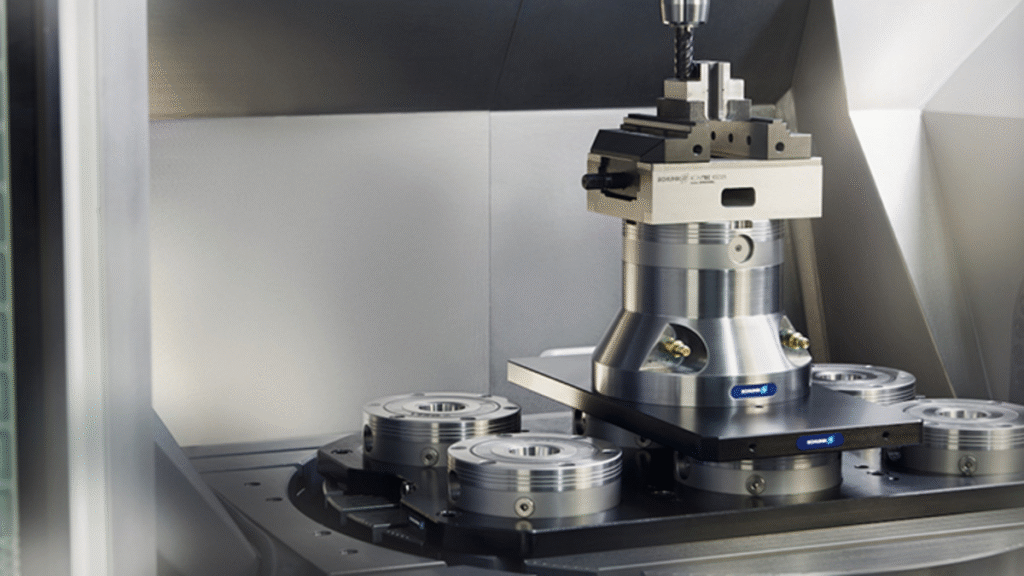
For shops that handle more demanding or multi-face parts, a dedicated 5 axis vise can offer an even greater advantage. It helps expose more of the workpiece, making it possible to complete more operations in one setup and use the machine more efficiently.
Fewer Setups Mean Lower Risk
Smaller shops often face pressure to deliver complex parts with limited time and limited staffing. In this kind of environment, every unnecessary setup creates both cost and risk. Repositioning the part multiple times takes time, but it also introduces more opportunity for alignment issues, tolerance drift, and operator error.
A specialized 5 axis vise helps reduce those risks by supporting better access around the workpiece. When more surfaces can be machined in one setup, the process becomes simpler and more stable. This is especially valuable for smaller shops because it reduces dependency on repeated adjustment and helps protect limited production capacity.
In many cases, reducing even one extra setup can make a real difference in delivery time and overall shop efficiency.
Consistency Helps Smaller Shops Build Reputation
For smaller manufacturers, reputation is often one of the most important business assets. Customers may initially choose a small shop because of flexibility or responsiveness, but they return because of reliability. If the shop can deliver consistent quality, stable lead times, and fewer production issues, it becomes easier to keep customers and win more demanding work.
Workholding plays an important role in that consistency. A more repeatable cnc vise helps produce parts with fewer setup-related variations, which makes inspection results more predictable and machining performance easier to manage. This reduces the likelihood of scrap, rework, and delivery delays.
For a small shop, avoiding those problems is especially important. A few preventable issues can take up a disproportionate amount of time and affect customer confidence much more than they would in a larger organization.
Flexibility Is a Competitive Strength
One of the natural advantages smaller shops often have is flexibility. They can sometimes respond faster to custom jobs, smaller batches, or unusual part requirements than larger companies can. But to keep that advantage, they need workholding that supports changing production needs without creating chaos at the setup stage.
That is why reviewing a broader cnc vise lineup is often a practical step. A wider range of options allows the shop to choose solutions that better match different part types and machining strategies. Instead of forcing every job into the same general-purpose setup, the shop can create a more adaptable and efficient workholding approach.
This kind of flexibility helps smaller businesses compete on speed and responsiveness while still maintaining machining quality.
Smarter Workholding Can Be a Cost-Effective Upgrade
Not every improvement in a machine shop has to involve a major capital purchase. In fact, some of the most effective upgrades come from addressing smaller process bottlenecks that affect the entire workflow. Workholding is a good example. A more suitable vise may cost more than a basic option, but if it reduces setup time, improves consistency, and lowers rework, the return can be significant.
For smaller shops, this kind of investment often makes more sense than waiting for a major equipment upgrade. It provides a more immediate operational benefit and helps the business strengthen its existing capability before taking on larger expenses.
In that sense, better workholding is not just a technical improvement. It is also a smart business decision.
Conclusion
Smaller machine shops do not need to outspend larger competitors to stay competitive. In many cases, they simply need to make better use of the resources they already have. The right workholding strategy helps them do exactly that by improving setup efficiency, reducing variation, and making complex machining more manageable.
A well-chosen 5 axis vise or cnc vise can help smaller shops run more efficiently, deliver more consistent quality, and compete more confidently in demanding markets. In the end, success does not always come from being bigger. Sometimes it comes from setting up smarter.