Introduction
A precipitation hardening high-temperature alloy is an advanced engineering material designed to maintain excellent strength, durability, and structural stability under demanding operating Steel And Stainless Steel conditions. These alloys are commonly used in industries where components must withstand elevated temperatures, mechanical stress, oxidation, and corrosive environments. Aerospace, power generation, chemical processing, and industrial manufacturing are among the major sectors that rely on high-performance alloys for critical applications.
Precipitation hardening is a specialized heat treatment process that improves the mechanical properties of certain metals by forming fine particles within their microstructure. These particles restrict the movement of dislocations, making the material stronger and more resistant to deformation. When combined with high-temperature performance, this strengthening method produces materials suitable for complex engineering requirements.
Understanding the properties, manufacturing processes, advantages, and applications of precipitation hardening high-temperature alloys can help engineers and manufacturers select appropriate materials for reliable, long-lasting components.
What Is a Precipitation Hardening High-Temperature Alloy?
A precipitation hardening high-temperature alloy is a metal alloy strengthened through controlled heat treatment and designed to retain useful mechanical properties at elevated temperatures. Depending on its composition, it may be based on nickel, iron, cobalt, or other metallic systems.
Nickel-based superalloys are particularly important because they can provide excellent high-temperature strength, oxidation resistance, and creep resistance. Some precipitation-hardening stainless steels and iron-based alloys also offer valuable combinations of strength and corrosion resistance, although their maximum service temperatures vary significantly.
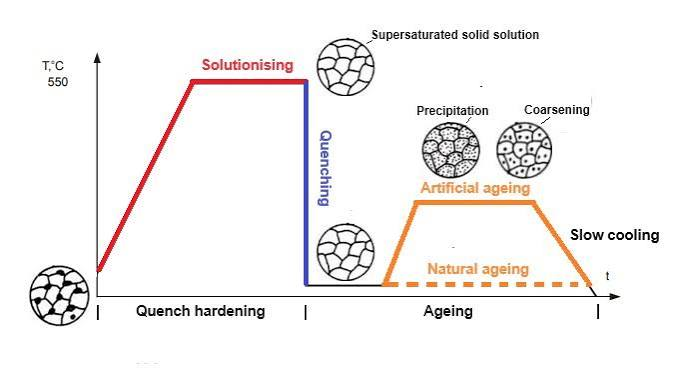
The precipitation hardening process generally involves three stages: solution treatment, rapid cooling, and aging. During solution treatment, the alloy is heated to dissolve selected alloying elements into a solid solution. It is then cooled under controlled conditions to retain a suitable structure. Finally, aging allows fine strengthening precipitates to form throughout the material.
The resulting microstructure improves resistance to deformation and helps components maintain their required dimensions and mechanical performance.
Key Properties of Precipitation Hardening High-Temperature Alloys
1. High Mechanical Strength
One of the most important characteristics of precipitation hardening alloys is their ability to achieve high strength. Fine precipitates within the metal structure make it more difficult for dislocations to move when a load is applied.
This strengthening mechanism improves resistance to deformation and supports the production of components that must carry substantial mechanical loads. Depending on the alloy, heat treatment, and operating temperature, these materials can offer an effective balance of tensile strength, hardness, and toughness.
2. Excellent High-Temperature Performance
Components used in turbines, engines, furnaces, and energy systems often operate under continuous thermal stress. Ordinary materials may lose strength or experience excessive deformation when exposed to these conditions.
Specialized high-temperature alloys are engineered to maintain useful mechanical properties over a defined temperature range. Their performance depends on chemical composition, precipitate stability, grain structure, and the duration of exposure to heat.
Not every precipitation-hardening alloy is suitable for extreme temperatures, so engineers must evaluate the specific grade before selecting a material for high-temperature service.
3. Creep Resistance
Creep is the gradual deformation of a material under sustained stress, particularly at elevated temperatures. It can affect components that remain under load for extended periods, including turbine blades, pressure equipment, and industrial furnace parts.
Certain precipitation-hardening superalloys provide excellent creep resistance because their microstructures are designed to slow deformation mechanisms. Stable strengthening precipitates help maintain structural integrity during prolonged operation.
4. Oxidation and Corrosion Resistance
High-temperature environments may expose metal components to oxygen, moisture, combustion gases, chemicals, and other aggressive substances. Oxidation and corrosion can gradually damage surfaces and reduce component reliability.
Many nickel-based and other high-temperature alloys contain elements such as chromium that support the formation of protective oxide layers. However, resistance to particular corrosive environments varies by grade and operating conditions.
Selecting the right alloy requires consideration of temperature, chemical exposure, surface condition, and expected service life.
How Precipitation Hardening Works
Precipitation hardening improves an alloy’s strength through controlled changes in its internal structure.
Solution Treatment
The material is heated to a specified temperature so that suitable alloying elements dissolve into the metal matrix. The temperature and holding time depend on the alloy’s composition, dimensions, and processing requirements.
Rapid Cooling
After solution treatment, the material is cooled at a controlled rate, often by quenching. This step helps retain a supersaturated solid solution that can later produce strengthening precipitates during aging.
The appropriate cooling method depends on the alloy and the possibility of distortion or cracking.
Aging Treatment
During aging, the material is held at a selected temperature for a specified period. Fine precipitates form within the metal structure and obstruct dislocation movement.
Aging may take place at room temperature or an elevated temperature, depending on the alloy. The treatment must be carefully controlled because excessive aging can cause precipitates to grow and reduce strength, a condition known as overaging.
The complete process produces a microstructure tailored to the intended combination of strength, toughness, and temperature resistance.
Common Types of Precipitation Hardening High-Temperature Alloys
Several alloy families use precipitation hardening to achieve specialized mechanical properties.
Nickel-based superalloys: These materials are widely used in gas turbines, aerospace engines, and industrial power systems. Certain grades rely on gamma-prime or gamma-double-prime precipitates to improve high-temperature strength.
Iron-nickel-based superalloys: These alloys combine selected iron and nickel contents with other strengthening elements. They are used in applications requiring a balance of mechanical performance, thermal stability, and manufacturability.
Precipitation-hardening stainless steels: Grades such as 17-4 PH can achieve high strength and useful corrosion resistance through heat treatment. However, their suitability for high-temperature service must be assessed carefully because their properties and allowable operating temperatures differ from those of specialized superalloys.
Cobalt-based alloys: Certain cobalt-based materials provide valuable strength, wear resistance, and resistance to thermal or corrosive environments. Their strengthening mechanisms vary according to composition and processing.
Choosing among these materials requires an understanding of operating temperature, load, environmental exposure, manufacturing methods, and cost.
Industrial Applications
Aerospace and Aviation
The aerospace industry uses high-performance alloys in engine components, turbine systems, fasteners, and structural parts. These applications demand materials capable of handling mechanical loads, temperature changes, and demanding operating conditions.
Precipitation-hardening nickel-based superalloys are particularly useful where high strength and resistance to creep are essential. Material selection must account for the specific requirements of each engine component.
Power Generation
Gas turbines and other power-generation systems operate under demanding thermal and mechanical conditions. High-temperature alloys are used in selected turbine components, combustion systems, and supporting equipment.
Their ability to retain useful strength and resist environmental degradation contributes to dependable operation and longer maintenance intervals when properly designed and maintained.
Chemical and Petrochemical Processing
Chemical plants and refineries require materials that can withstand elevated temperatures, pressure, and exposure to potentially corrosive substances.
Appropriate high-temperature alloys may be used in reactor components, heat exchangers, valves, and specialized processing equipment. The selected grade must be compatible with the process chemicals and expected operating conditions.
Industrial Manufacturing
Manufacturing facilities use heat-resistant alloys in furnace fixtures, tooling, industrial heating equipment, and components exposed to repeated thermal cycles.
Precipitation hardening can provide the strength needed for demanding applications, although thermal fatigue, oxidation, and dimensional stability must also be considered during material selection.
Advantages of Precipitation Hardening High-Temperature Alloys
These materials offer several potential advantages for specialized engineering applications.
- Improved strength: Controlled precipitation increases resistance to deformation.
- Enhanced durability: Suitable grades can withstand demanding mechanical and thermal conditions.
- Long-term performance: Some alloys provide excellent resistance to creep and microstructural degradation.
- Design flexibility: Different compositions and aging treatments allow properties to be tailored to specific applications.
- Reduced component weight: High strength can enable efficient component designs when supported by appropriate engineering analysis.
- Reliable operation: Correctly selected materials can help reduce premature component failure and maintenance requirements.
Despite these benefits, precipitation hardening does not automatically guarantee superior performance in every environment. Engineers must balance strength, toughness, corrosion resistance, temperature capability, and manufacturing requirements.
Factors to Consider When Selecting an Alloy
Selecting a precipitation hardening high-temperature alloy involves more than comparing strength values. The expected service temperature is one of the most important considerations because some alloys lose strength or undergo undesirable microstructural changes when exposed to excessive heat.
Engineers should also assess tensile strength, creep resistance, fatigue performance, oxidation behavior, corrosion resistance, weldability, and machinability. Component geometry and manufacturing processes may influence the choice of material and heat treatment.
Cost is another important factor. High-performance nickel-based superalloys can be expensive, but their use may be justified when failure risks, maintenance expenses, and operating demands are considered.
Finally, suppliers should provide appropriate material certifications, chemical composition data, mechanical test results, and heat-treatment documentation. Testing and quality control help confirm that the selected material meets the required specifications.
Conclusion
Precipitation hardening high-temperature alloys play an essential role in modern engineering by combining controlled microstructural strengthening with the properties required for demanding operating environments. Depending on their composition, these materials can offer high mechanical strength, creep resistance, oxidation resistance, and reliable performance under elevated temperatures.
Their applications extend across aerospace, power generation, chemical processing, and industrial manufacturing. However, selecting the correct alloy requires careful evaluation of service temperature, mechanical loads, environmental exposure, and manufacturing requirements.
By understanding precipitation hardening principles and the differences between alloy families, engineers and manufacturers can make informed material choices, improve component reliability, and support long-term industrial performance. As advanced manufacturing technologies continue to develop, precipitation-hardening alloys will remain valuable materials for applications where strength, durability, and temperature resistance are essential.