Modern electronic devices require reliable charging solutions to keep up with busy lifestyles. Smartphones, tablets, laptops, wireless earbuds, and other gadgets depend on chargers that deliver sufficient power safely and efficiently. As technology continues to improve, USB-C chargers have become increasingly popular because of their versatility, compact design, and fast-charging capabilities. Among the available options, a 70W USB C charger stands out as a practical choice for users who need more power than a traditional charger can provide.
However, standard chargers still serve an important purpose, particularly for smaller devices and everyday charging needs. Understanding the differences between a 70W USB C charger and a standard charger can help you select the right option for your devices, lifestyle, and budget.
Understanding a 70W USB C Charger
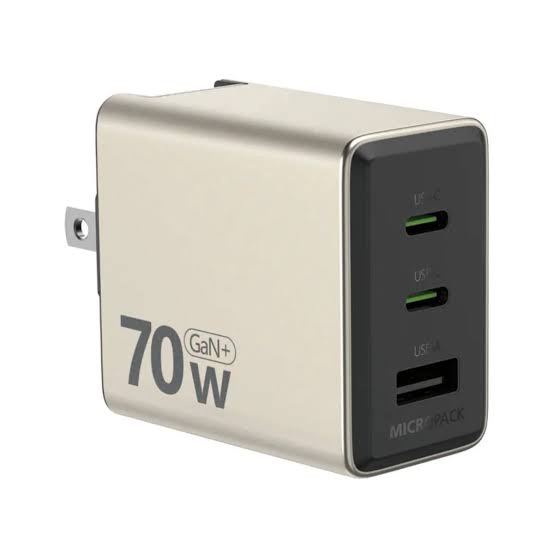
A 70W USB C charger is a power adapter designed to deliver up to 70 watts of electrical power through a USB-C connection when supported by the charger, cable, and connected device. This higher power output makes it suitable for many modern smartphones, tablets, and compatible laptops.
Unlike older charging adapters that may offer limited power, a 70W model can support demanding devices that need more energy. Many models use USB Power Delivery (USB PD), a charging standard that allows compatible devices and chargers to negotiate an appropriate power level.
The charger does not automatically force 70 watts into every connected device. Instead, the device draws power according to its charging requirements and the capabilities of the charger and cable. This makes compatibility an important consideration when purchasing a new adapter.
What Are Standard Chargers?
Standard chargers generally refer to conventional power adapters with lower output ratings, such as 5W, 10W, 12W, or 18W. Some standard chargers offer higher outputs, so the term does not describe one specific power level or technology.
Traditional USB-A chargers are common examples. They often use older charging protocols and may deliver less power than modern USB-C adapters. Nevertheless, they remain useful for charging basic smartphones, Bluetooth accessories, small electronics, and other devices that do not require high charging speeds.
Some newer USB-C chargers are also considered standard chargers because they provide relatively modest power output. Therefore, the connector type and the charger’s wattage should be considered separately when comparing products.
Key Differences Between a 70W USB C Charger and Standard Chargers
1. Charging Speed and Power Output
The most noticeable difference is the amount of power each charger can deliver. A 70W USB C charger can supply substantially more power than a basic 5W or 10W adapter when the connected device supports it.
For example, a compatible laptop may charge considerably faster with a suitable 70W charger than with a low-power phone adapter. A smartphone that supports fast charging may also benefit from a more powerful adapter, although its actual charging speed depends on the phone’s supported charging technology.
Standard chargers can still provide satisfactory performance for devices with smaller batteries or limited power requirements. The key is choosing an adapter that matches the device’s charging capabilities.
2. Compatibility With Different Devices
A major advantage of USB-C charging is its growing adoption across different categories of electronics. A suitable 70W USB C charger may power a compatible smartphone, tablet, laptop, or other USB-C device.
This flexibility can reduce the need to carry several different power adapters. For example, someone who uses a tablet for entertainment and a laptop for work may be able to charge both with the same adapter, provided each device supports the required charging specifications.
Standard chargers may have more limited compatibility, particularly when they use older connectors or lack the necessary power output. However, they remain appropriate for devices designed specifically for those chargers.
Before buying any adapter, check the manufacturer’s charging recommendations, connector requirements, and supported power levels.
3. USB-C Technology and Charging Standards
USB-C is a connector type, not a guarantee of fast charging. Its reversible design makes plugging in the cable convenient, while its broad adoption allows compatible devices to share charging accessories.
A 70W USB C charger that supports USB Power Delivery can negotiate suitable power levels with compatible devices. This helps the charger provide the power a device can accept instead of delivering its maximum output in every situation.
Some standard chargers use older USB-A connections and charging protocols. These may work perfectly well, but they might not support the same power levels or charging features.
It is important to remember that the charger, cable, and device must work together. A high-wattage adapter cannot provide its full rated power if the connected device or cable does not support it.
4. Charging Multiple Types of Devices
A higher-power adapter can be particularly useful for people who own several electronic devices. A 70W charger may support phones, tablets, and certain laptops without requiring a separate high-power adapter for each product.
Some models also include multiple ports. However, the total available power may be shared between connected devices, and the output assigned to each port varies by model.
Standard single-port chargers can be convenient for charging one device at a time. They are often sufficient for wireless earbuds, smaller accessories, and older smartphones.
When choosing a multiport charger, review its total wattage and individual port specifications rather than assuming every port can deliver the full rated power simultaneously.
5. Portability and Design
Modern 70W USB-C chargers are often designed with portability in mind. Many feature compact housings and lightweight construction, making them suitable for office use, travel, and everyday commuting.
Some models use gallium nitride (GaN) technology, which can help manufacturers produce smaller power adapters without sacrificing their intended power output. However, not every 70W charger uses GaN, and dimensions vary between products.
Standard chargers can be even smaller when they deliver low power. A basic phone adapter may be all you need for a lightweight travel setup.
Your ideal choice depends on whether you prioritize maximum versatility or a simple charger for a particular device.
6. Energy Efficiency and Heat Management
Charging efficiency affects how much input electricity reaches a device’s battery and how much energy is lost as heat. Both high-power and standard chargers vary in efficiency depending on their internal design, components, operating conditions, and load.
A 70W charger does not necessarily consume 70 watts continuously. Its power consumption changes according to the connected device’s needs, and it generally draws less power when charging requirements are lower.
Good-quality chargers also include appropriate electrical protection and thermal management features. These may help protect against overheating, overcurrent, and short circuits, depending on the model.
Choose a reputable charger that meets relevant safety requirements, and avoid damaged cables or adapters from unknown sources.
7. Price and Overall Value
Standard chargers are often less expensive, making them a sensible option for people who only need to charge a basic smartphone or small accessory.
A 70W USB C charger may cost more because of its higher power capacity, advanced charging support, and potential compatibility with laptops and tablets. Nevertheless, one versatile adapter could replace several separate chargers for users with multiple compatible devices.
To determine value, consider the devices you own, the charging speed they support, the number of ports you need, and how frequently you travel.
Paying for extra wattage is not always necessary. A charger with the right specifications is more useful than one that offers power your devices cannot use.
How to Choose the Right Charger for Your Needs
Choosing between a 70W USB C charger and a standard charger begins with understanding your everyday charging habits.
If you regularly use a compatible laptop, tablet, and smartphone, a 70W model may provide greater convenience. It can be particularly useful for students, remote workers, business travelers, and people who want to carry fewer accessories.
If you primarily charge a smartphone overnight or power small accessories throughout the day, a standard charger may be sufficient. In this situation, a higher-wattage model may not deliver a noticeable improvement if the device has a low maximum charging rate.
Before purchasing, check the following factors:
- Power requirements: Confirm the recommended wattage for your device.
- Charging protocol: Look for USB Power Delivery or another protocol supported by your electronics.
- Cable specifications: Use a cable rated for the required power and current.
- Number of ports: Consider whether you need to charge multiple devices simultaneously.
- Safety features: Choose a well-built adapter from a reputable manufacturer.
- Travel convenience: Compare the charger’s size, weight, and compatibility with local electrical outlets.
These checks can help you avoid paying for unnecessary features while ensuring that your chosen charger meets your practical requirements.
Common Myths About 70W USB C Chargers
One common misconception is that a 70W charger will damage every smartphone that connects to it. In reality, compatible devices negotiate charging power according to supported standards. A reputable charger should supply appropriate power rather than automatically forcing its maximum rated output into a device.
Another misunderstanding is that every USB-C cable supports 70W charging. Cable capabilities differ, and some higher-power USB-C charging arrangements require cables with specific ratings or electronic identification.
It is also incorrect to assume that a higher wattage always means faster charging. A device’s charging circuitry, battery condition, temperature, and software settings can all affect performance.
Understanding these factors helps users make informed decisions instead of relying solely on wattage numbers printed on product packaging.
The Future of USB-C Charging
USB-C charging continues to develop as manufacturers introduce new devices and improve charging technology. Its widespread use offers consumers greater flexibility, particularly when compatible phones, tablets, and laptops can share power adapters.
Higher-power chargers are also becoming increasingly practical for everyday use because manufacturers continue to refine adapter designs. Features such as GaN components, intelligent power distribution, and multiple charging ports can make modern adapters more convenient.
At the same time, standard chargers remain relevant for low-power devices and users who prefer straightforward, affordable solutions. The future is not necessarily about replacing every traditional charger with a high-wattage model. Instead, it is about choosing charging accessories that suit specific requirements.
Conclusion
A 70W USB C charger offers higher power capacity, broad potential compatibility, and useful versatility for people who own multiple modern electronic devices. When paired with a compatible device and suitable cable, it can provide faster charging than many low-power standard chargers.
Standard chargers, however, remain reliable options for basic smartphones, earbuds, and other accessories that require less power. They can also be more affordable when advanced charging capabilities are unnecessary.
Ultimately, the best choice depends on your devices, charging habits, and budget. Check power requirements, supported charging protocols, cable ratings, and safety features before purchasing. By comparing these details, you can choose a charger that delivers the right balance of convenience, performance, and value for your everyday technology needs.